
Scripture does not directly mention betting, yet it offers a set of principles by which believers evaluate such practices. At the center of the discussion stand money, inner motives, and trust in God. The resulting framework is straightforward: the question is not simply one of "permitted or forbidden," but rather concerns where betting leads and what it does to a person. Wagering on sporting events has become a mainstream form of entertainment. Mobile applications, advertising integrations during broadcasts, and bookmakers' bonus programs have made the entry into the world of betting nearly seamless. Online bookmakers make no secret of this: data on the best sports betting apps at bookabet.co.tz underscores that they feature a minimal barrier to entry. Against this backdrop, believers increasingly face a practical question about the boundaries of what is permissible and about the consequences for family, finances, relationships, and spiritual life. This article examines which biblical principles apply to contemporary sports betting. Sports gambling is commonly understood as a monetary wager on the outcome of a competition, built on risk and the expectation of winnings. It is important to distinguish this practice from the "casting of lots" in the biblical tradition, which was used as a means of seeking God's guidance (Josh. 18:8–10; Acts 1:26). The modern model of betting operates on a different logic: it is motivated by profit and is essentially grounded in chance. The pervasive question of Scripture, as the passage states, is: whose resources are these, and how should they be managed? In 1 Chr. 29:14, the principle of stewardship is recorded: "Everything comes from you, and we have given you only what comes from your hand." Money, talents, and time are regarded not as a person's absolute property, but as entrusted capital. The Parable of the Talents (Matt. 25:14–30) reinforces this point: each person is called to responsible and faithful stewardship of the opportunities given to them. A wager is, in essence, a risk of losing resources for which a person bears responsibility before God and those close to them. The Apostle Paul warns: "Those who want to get rich fall into temptation and a snare… for the love of money is a root of all kinds of evil" (1 Tim. 6:9–10). The mechanics of betting exploit precisely this hope for quick winnings, substituting patience and honest labor with the anxious anticipation of gambling. Prov. 13:11 adds another dimension: "Wealth gained hastily will dwindle, but whoever gathers little by little will increase it." A wager, even a successful one, is by its nature closer to "hasty" acquisition than to the fruit of patient labor. Scripture directs believers toward seeking God's Kingdom and trusting in His provision (Matt. 6:31–33). The gambling model is built on the opposite logic: the expectation of a random outcome. The question of trust inevitably comes down to motives and "inner idols." A Christian would do well to approach all forms of gambling entertainment with care, and sports betting is no exception. The temptations today are considerably greater than they were a decade ago, largely due to the rapid growth of online betting. The industry has long expanded beyond traditional markets: as the authors of the review site bookabetrw.com at the top search results note, online bookmakers are gaining popularity not only in Africa but also in Latin American countries, where religion continues to occupy an important place in everyday life. This means that the question of permissible boundaries confronts believers around the world, regardless of cultural context. It is precisely for this reason that biblical principles related to trust in God and responsible stewardship of resources prove relevant far beyond the boundaries of any single denomination or region. Reflections on the order of creation (Heb. 11:3) and the historical environment of the early church — where gambling was widespread in ancient cities — serve as the backdrop for this topic. The first Christians consciously distanced themselves from such practices, demonstrating a different standard of life. The risk of gambling becoming a competing "loyalty" is stated with unmistakable clarity: "You cannot serve both God and mammon" (Luke 16:13). When priorities become misplaced, it is reflected in relationships and in responsibility toward others. The commandment to love one's neighbor (John 13:34–35) raises an ethical question: addiction, financial failures, emotional swings, and the "normalization" of betting within one's social circle affect not only the gambler. Even without overt addiction, betting can shift family priorities and diminish one's readiness to help others. Regular betting as a pattern of behavior frequently leads to a familiar set of effects: Believers seek to live in a way that gives no grounds for reproach and demonstrates a different standard of integrity. The consequences are felt not only in one's finances, but also in how those around them perceive the faith itself. The term "sports betting" does not appear in Scripture, yet there is a consistent set of principles for evaluating any financial practice. The risks form a chain: from unwise stewardship of resources, through greed and trust in "chance," to misplaced priorities, harm to one's neighbor, and very tangible practical consequences. The responsibility of a believer lies in making decisions consciously, examining motives and consequences, and striving to honor God in the use of money, time, and attention.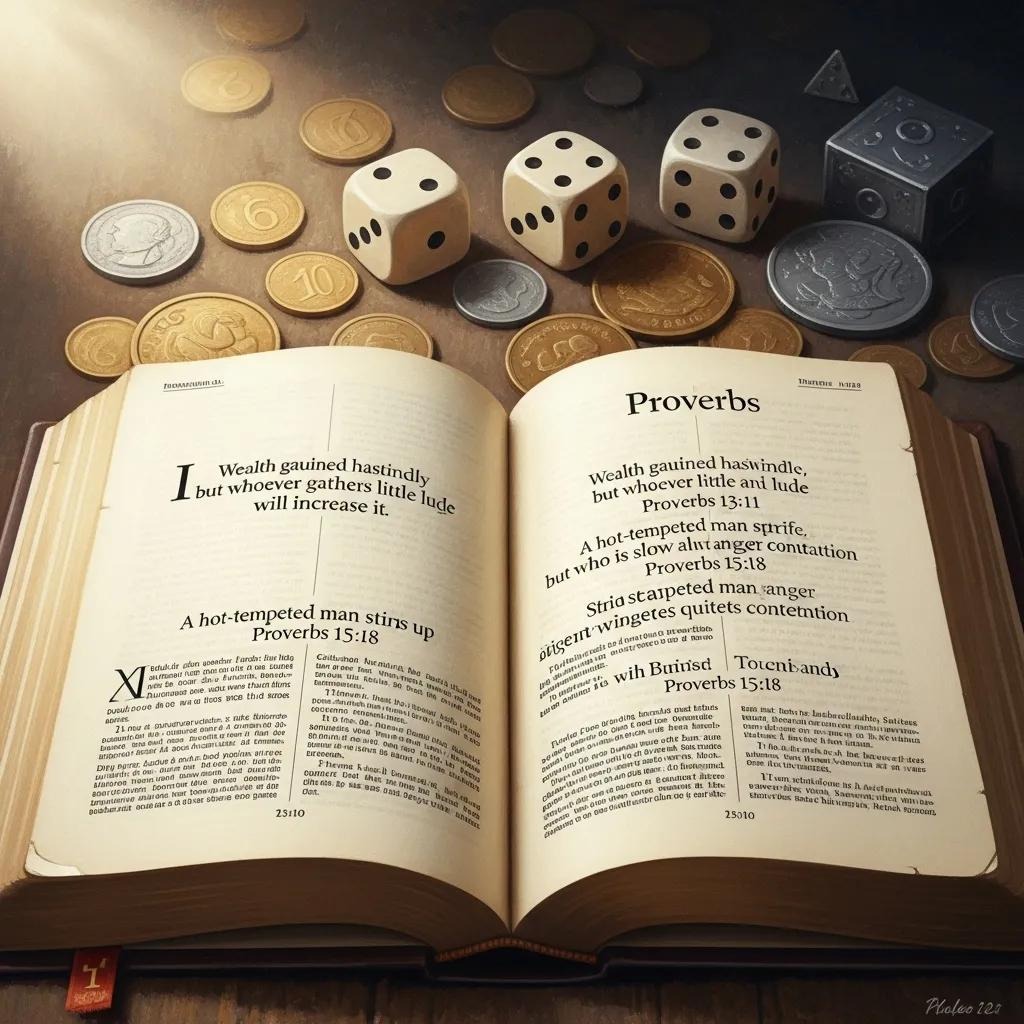
Why the Topic Is on the Agenda Again
Where the Casting of Lots Ends and Gambling Begins
Resources and Responsibility
Key Theses:
Why "Easy Money" Becomes a Spiritual Trap
Trust in God or a Bet on Chance
What Betting Does to Attachments and to One's Neighbor
Practical Consequences and Reputation
A Framework for Personal Decision-Making